
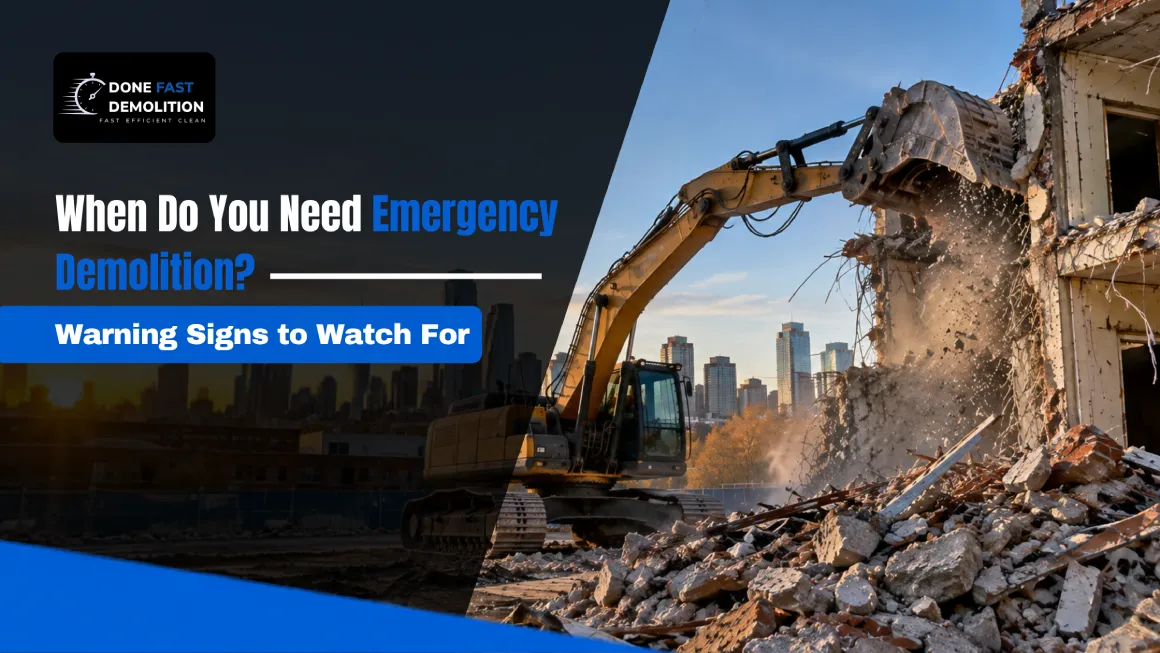
You can hardly ever plan for the aftermath of a serious building emergency. One moment, a property is standing as usual; the next, a fire, severe storm or vehicle impact has damaged the structure. Once the immediate danger has passed, there is still the question of what can safely remain and what needs to be dealt with.
For property owners dealing with this situation in Calgary, the answer depends on the extent of the damage and the condition of the remaining structure. Sometimes the structure can be repaired, and in other cases, emergency demolition may be necessary.
The challenge is knowing when the damage has become serious enough to require immediate professional attention. In this blog, we’ll look at the warning signs that may indicate you need emergency demolition.
Serious damage does not always mean an entire building needs to be demolished. However, certain changes can indicate that the structure has become unstable or that a damaged section may no longer be safe to leave in place.
The following warning signs are worth taking seriously, especially when they appear after a fire, collapse, severe storm, vehicle impact or other major incident.
A partially collapsed roof, floor or wall is one of the clearest signs of serious structural damage.
Even when only one section has collapsed, the remaining parts of the building may have been affected. The failure can change how weight is distributed across walls, beams, floors and other structural components. Look for:
Do not enter the damaged area to determine how much of the building is affected. A structure that is still standing may not be stable.
A wall that suddenly starts leaning, bowing or separating from the rest of the building can indicate that it has lost structural support. You may notice:
These changes can be particularly concerning when they appear after a fire, vehicle impact, collapse or severe weather event. The wall should not be pushed, removed or otherwise disturbed before its condition has been assessed.
A building does not need to be completely destroyed by fire to have serious structural damage.
High temperatures can weaken framing, roof components, floors and the connections between structural elements. Firefighting water can create additional problems, particularly when materials have already been weakened by heat.
Heavy charring, sagging ceilings, damaged roof sections, shifted walls and exposed supports can indicate that the fire affected the building’s structure. An unstable floor or visibly damaged framing is another reason for an assessment. Some fire-damaged buildings can be repaired, while others may require selective or partial demolition.
A roof or floor that suddenly develops a noticeable dip can indicate damage to the framing or the components supporting it. Fire can weaken structural framing. Water from firefighting, flooding or a damaged roof can add weight to weakened materials. A vehicle impact or partial collapse can also affect the supports carrying a roof or floor.
Some signs are easy to spot:
Avoid walking on visibly damaged floors or standing beneath severely damaged roof sections until they have been assessed.
Severe weather can damage roofs, exterior walls, windows, garages and other structural components. In more serious cases, wind, hail, flooding, or fallen trees can leave parts of a property unsafe.
The City of Calgary advises property owners with structural damage to hire a structural engineer and, if demolition is required, work with a demolition or general contractor to address permits, asbestos requirements, utility disconnections, and inspections.
The important point is that storm damage should not automatically be treated as a demolition problem. The condition of the structure needs to be assessed first.
A vehicle collision can damage an exterior wall, support, garage, storefront, or another structural component. The visible damage may not show the full extent of the impact.
If the collision has affected the stability of the building, the damaged area may need to be secured, assessed, repaired, or removed. The appropriate response depends on the extent of the damage and the condition of the remaining structure.
A building can become unsafe due to fire, structural deterioration, collapse or other serious damage. An unsafe designation does not automatically mean the entire building must be demolished.
The appropriate response depends on the reason for the designation and the condition of the property. If authorities determine that a property cannot be safely occupied, the owner needs to follow the applicable instructions before allowing anyone back inside or starting work.
In the first hour after serious building damage, the first priority is safety. All people must evacuate the building, move to a safe space and call demolition services if there is a risk of fire, gas leaks, or collapse.
Here is a list of things that you should keep in mind in case of emergency:
Move people away from the building and any areas that appear unstable. Do not enter a damaged structure to inspect it, collect belongings, or begin cleanup if there is a risk of collapse.
It is advisable that people not enter damaged buildings or restricted areas until authorities declare them safe.
A damaged structure can behave unpredictably when its weight or support is disturbed.
Trying to remove a damaged wall, roof section, or other structural component yourself can create additional risks. Stay outside the affected area and leave structural assessment and demolition work to qualified professionals.
If it is safe to do so, take photos or videos of the property before cleanup or demolition begins. Record the following things:
Keep this information with your other records in case it is needed for an insurance claim.
If the damage may result in an insurance claim, notify your insurer and ask what information or documentation they require. Avoid assuming that every demolition cost will be covered. Insurance coverage depends on the policy and circumstances of the loss.
Once the immediate emergency is under control, a demolition contractor can assess the site and determine what demolition work may be required. The contractor can then help coordinate the demolition scope, site access, utilities, permits, and removal requirements based on the property.
Finding serious damage does not always mean the building has to come down. The next step depends on how badly the building is damaged and whether it can be made safe again.
A professional will inspect the building and determine which areas have been damaged. This helps determine whether the property can be repaired or if some or all of it needs to be removed.
If part of the building is unstable, people may need to stay away from the affected area. Access may be restricted until the building is safe to enter.
Before work starts, gas, electricity and water may need to be disconnected or made safe. Older buildings may also need to be checked for asbestos or other hazardous materials.
Depending on the property and the work involved, permits may be required before demolition begins. Calgary’s demolition requirements can also involve utility disconnections, asbestos requirements and inspections. For a detailed guide to the demolition permit process, refer to the permit requirements here.
The condition of the building will determine what happens next. A damaged property may be repaired if the structure can be made safe. If only one part is badly damaged, that section may be removed. If the building cannot be safely repaired, complete demolition may be necessary.
Once the work is finished, any required inspections can be completed to make sure the site meets the applicable requirements.
The important thing is to avoid assuming that serious damage automatically means full demolition. A proper assessment can show what needs to be removed and what, if anything, can safely remain.
In Calgary, an emergency demolition can typically cost around $15,000 to $50,000+ for a standard residential structure. The final cost depends on the property, extent of damage, site conditions, equipment requirements, and the amount of material that needs to be removed.
Emergency projects can also be harder to estimate at the beginning because the full condition of a damaged structure may not be known until it has been assessed. The overall cost of an emergency demolition in Calgary can be affected by the following factors:
For a more detailed breakdown of demolition costs across different types of projects, see our guide to Calgary demolition costs in 2026.
Emergency demolition may be necessary when sudden damage leaves a building or part of it unsafe to occupy, repair, or leave standing. Fire, structural damage, severe weather, and vehicle impacts are some situations that can lead to urgent demolition.
The right response starts with keeping people away from the damaged area and contacting emergency services when there is an immediate danger.
If your property in Calgary has suffered serious damage and demolition may be required, Done Fast Demolition can assess the project and help you move forward with the required demolition work.
Extra care may be needed when a damaged building is close to another structure or shares a wall, foundation or other structural element. The condition and position of the neighbouring property may need to be considered before demolition or major repair work begins. Access, utilities and the risk of affecting the adjacent structure may also need to be addressed.


Ready to move forward? We provide detailed, no-obligation quotes within 24 hours.
$5M Liability & WCB Coverage.
Same-day replies for most requests.