
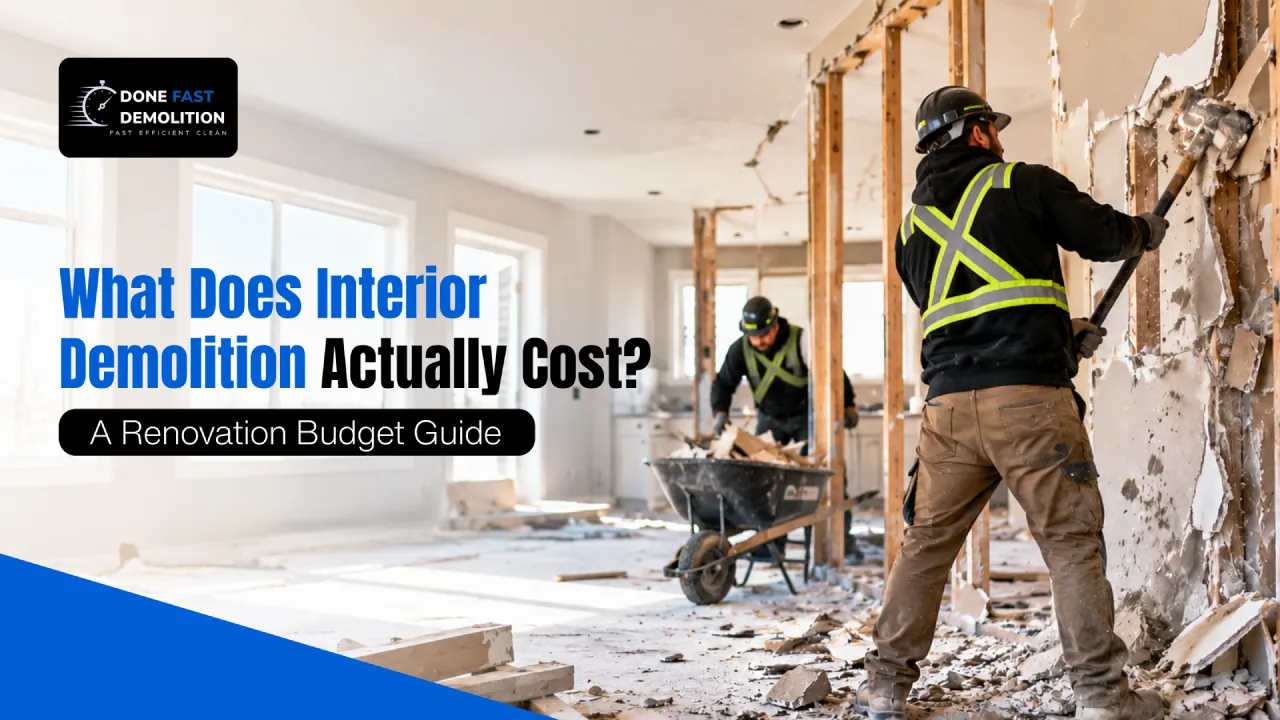
Quick Answer: In Calgary, interior demolition cost typically ranges from $1,500 to $25,000+, depending on the project size, materials being removed, labour and debris disposal. Small jobs usually cost less, while a full-floor strip-out can cost much more. Asbestos removal, permit requirements and unexpected work can increase the final price.
An interior demolition estimate can be difficult to judge when you don’t know what goes into the price. One contractor may quote for removing the materials and clearing the site, while another may list disposal or other work separately. The difference matters when you’re trying to work out the actual cost of preparing a property for renovation.
In this guide, we’ll look at the interior demolition cost in Calgary, the factors that affect pricing and the extra expenses to check before agreeing to a quote.
The cost of interior demolition in Calgary can range from $1,500 to $25,000+ for residential projects. The final price depends on the area being cleared, the types of materials being removed and the labour involved.
Contractors may charge by the room, square footage or overall project scope. Some quotes include debris removal and disposal, while others list these as separate costs.
Get a project-specific quote from Done Fast Demolition to understand the costs involved in your interior demolition.
A small removal job may only involve a few fixtures or one section of flooring. A larger project may require removing cabinets, drywall, ceilings and flooring across several rooms. These differences make it important to compare quotes based on the work included rather than the price alone.
Interior demolition is also different from full-house demolition. Interior work prepares the existing building for renovation, while full-house demolition involves taking down the building itself. The costs and requirements are not the same.
The cost of Interior demolition mainly depends on the size of the project and the materials involved. A small removal job may take only a day, while a full interior strip-out can take several days and require more waste handling, which can affect your renovation demolition budget.
Here are the estimated costs for interior demolition based on the project scope:
Type of Interior Demolition | Estimated Cost |
Non-Structural Wall Removal | $250-$1000 |
Structural/Load-Bearing Wall Removal | $5,500-$20,000 |
Drywall Removal | $450-$5,500 |
Carpet Flooring Removal | $100-$300 for small jobs and $1,000-$2000 for complete house |
Hardwood Flooring Removal | $500–$1,000 for small room; and $3,500–$8,500+ for whole house |
Tile Flooring Removal | $300-$1,100 |
Kitchen Demolition | $2,000-$6,000 |
Bathroom Demolition | $1,000-$4,000 |
Basement Gutting | $2,000-$8,000 |
Concrete Removal | $1,000-$3,000 |
Note: These prices are just estimates, not fixed prices. Actual costs depend on the project scope, site conditions and what is included in the contractor’s quote.
Removing a non-structural wall typically costs around $250-$1000. These walls do not support the building’s main structure, so removal is generally less involved than taking down a load-bearing wall. The cost depends on the wall’s size, construction and whether the work includes removing drywall and clearing the debris.
Structural or load-bearing wall removal can cost $5,500-$20,000. These walls support the building, so removing one may require an engineer’s assessment, temporary supports and a suitable replacement beam. Permit requirements and the work needed to protect the structure can also affect the total cost.
Drywall removal typically costs $450-$5,500, depending on the area being cleared and the amount of material involved. Removing drywall from one room is generally less expensive than stripping the walls throughout a house.
Insulation removal, debris handling and disposal can also affect the total.
Carpet removal can cost $100-$300 for small jobs and $1,000-$2000 for a whole house. The price depends on the amount of carpet, the type of underlay and how the flooring is attached. Removing staples, tack strips and leftover adhesive may add to the work.
Hardwood flooring removal can cost $500–$1,000 for a small room or $3,500–$8,500+ for a whole house. Nailed-down and glued-down floors take longer to remove than floating floors. The subfloor condition and the amount of debris also affect the final cost.
Tile flooring removal typically costs $300-$1,100. The work involves breaking up the tiles and removing them from the property. Thick mortar beds, stubborn adhesive and the need to clear the subfloor can increase the labour and disposal costs.
Kitchen demolition can cost $2,000-$6,000, depending on what needs to be removed. The work may include cabinets, countertops, backsplash tiles, flooring and selected fixtures. Partial kitchen demolition generally involves less work than stripping out the entire space. Plumbing and electrical disconnections may require separate trades and should be confirmed in the quote.
Bathroom demolition typically costs $1,000-$4,000. The price depends on whether the work involves removing a vanity and fixtures or also stripping out the bathtub, shower, tiles and flooring. Tiled surfaces and heavy fixtures can take longer to remove and create more debris.
Basement gutting can cost $2,000-$8,000, depending on the basement size and the extent of the removal work. This may include drywall, flooring, ceiling materials, interior partitions and built-in features. Limited access, moisture damage and additional materials can increase the cost.
Concrete removal typically costs $1,000-$3,000 for the projects covered by this estimate. The final price depends on the thickness of the concrete, the area being removed and access to the work site. Reinforced concrete or a thick slab may require specialist equipment and additional labour, and hauling and disposal can increase the total.
Two demolition projects of similar size can have different prices. The type of work, condition of the building and amount of debris all affect the time and resources needed.
A larger area usually means more material to remove and more debris to carry away.
However, square footage alone does not tell the whole story. Removing flooring from an open room is different from stripping the same area down to the framing. Demolition depth matters as much as the size of the space.
Some materials take more time and effort to remove than others. Glued-down flooring, ceramic tiles, plaster and heavy countertops may take more time and effort to remove than basic floor coverings or simple fixtures.
Careful removal can also take longer when materials need to stay intact for reuse. The contractor should know what to remove and what must remain undamaged.
Removing a non-load-bearing partition is different from removing a load-bearing wall. Structural changes may require an engineer’s assessment, temporary support and approval before work begins.
Electrical wiring, plumbing and other building services can also affect the cost. These services may need to be disconnected or moved before demolition can proceed safely. Budget any replacement or installation work separately from demolition.
A room with direct access to the outside is often easier to clear than one on an upper floor with narrow stairs or hallways.
Limited parking, long carrying distances and restrictions on when work can take place may add to labour and debris-removal costs. These details are worth discussing during the site visit.
Older buildings may contain outdated wiring, damaged plumbing or materials that need special handling.
Water damage and other hidden problems may also become visible after the walls or floors are opened. If additional work is needed, the contractor may have to pause demolition until the issue is assessed. This can affect both the cost and the schedule.
The quote may include the demolition crew, tools, dust barriers, floor protection and cleanup. Larger jobs may need additional workers or equipment to remove materials efficiently.
Site protection matters when the rest of the home will remain occupied or when nearby rooms need to stay in good condition. Check what protection and cleanup are included before comparing quotes.
Demolition can reveal issues that were not visible before the walls, floors or ceilings were opened. Damaged materials, concealed services or suspected hazardous substances may require further assessment.
Set aside a contingency of around 10–15% of the expected project cost as a starting point. A larger allowance may be sensible for older properties or projects with an uncertain scope.
An interior demolition project typically takes anywhere from 2 days to 3 weeks to complete. The exact timeline depends on the area size, the materials being removed and any extra work needed before demolition can start.
Small projects usually involve removing flooring, cabinets, fixtures or other materials from a limited area. The work may take a few days, depending on how easily the materials can be removed and how much debris needs to be cleared.
Medium projects may include a kitchen or bathroom strip-out, multiple rooms or the removal of several types of interior finishes. These jobs take longer when materials are difficult to remove, the crew needs to protect nearby areas or must manage larger amounts of debris.
Large projects can involve stripping out an entire floor, removing multiple interior partitions or clearing a large commercial space. The work may take several weeks when the area is extensive, access is limited or additional steps are needed before demolition can begin.
Interior demolition in Calgary does not require a standalone demolition permit; instead, a building permit is generally required if the work involves structural changes, partitions or mechanical systems.
The City of Calgary requires a residential improvement building permit for interior demolition in homes and a commercial improvement building permit for interior demolition in commercial properties. A Building permit is typically required in these situations:
Minor cosmetic work, such as painting or flooring work, generally does not require a building permit. Requirements depend on the exact work planned, so confirm the permit needed with the City of Calgary before demolition begins.
The cost of an interior demolition permit in Calgary depends on the type of work being done. According to the City of Calgary’s 2026 fee schedule, the listed fees include:
The total cost varies by project. The City also lists a standard residential interior renovation permit fee of $205.92, but it may not apply to every interior demolition project. Check the City of Calgary’s permit fee schedule to confirm the correct fee for your project.
Asbestos and other hazardous materials can increase interior demolition costs, particularly in older homes. If these materials are present, testing and specialist removal may be needed before the main demolition work can proceed.
Type of Work | Estimated Cost (CAD) |
Asbestos inspection and testing | $250-$800 |
Asbestos removal from vinyl flooring in 1–2 rooms | $1500-$3,000 |
Asbestos removal from pipe or boiler insulation | $2,000-$5,000 |
Asbestos removal from textured or popcorn ceilings | $3,000-$6,000 |
Large-scale asbestos removal | $10,000-$30,000+ |
Note: These figures are not fixed prices. The final cost depends on the amount and type of asbestos-containing material, access to the area, containment requirements and disposal procedures.
Mold remediation can also add to the budget. Small jobs may cost around $800-$1,500, while larger projects can cost several thousand dollars or more. The price depends on the extent of the affected area and the work needed to address it.
Homes built before 1990 may contain asbestos in older flooring, insulation or ceiling finishes. A home’s age alone does not confirm its presence, so testing may be needed before these materials are disturbed. Lead-containing paint and other hazardous materials may also require specialist assessment and handling.
If hazardous materials are found, include testing and removal in your renovation budget before setting the demolition schedule. A qualified professional can assess the materials and provide a more accurate estimate for the work involved.
Debris removal adds to the cost of interior demolition in Calgary. The total depends on the amount of waste, the type of material and the cost of transporting it to a disposal facility. The City of Calgary’s 2026 residential landfill rates include:
Additional costs may include:
These landfill rates are for residential customers, so they may not apply to waste collected by a demolition contractor. Commercial loads can have different requirements and charges. Before demolition begins, confirm whether your contractor’s quote includes bin rental, loading, hauling and disposal fees.
Set your interior demolition budget before work begins to help manage costs and avoid unexpected expenses. Before comparing quotes, make a list of what needs to be removed and what must stay in place.
Be specific about the rooms, flooring, walls, ceilings, cabinets and fixtures that need to be removed before requesting a quote. If a wall may be structural, have that checked before including it in the demolition plan.
A clear scope helps the contractor estimate the labour, equipment and time required. Changes made after work begins can increase the cost.
Get quotes that cover the same work so you can compare prices fairly. Ask whether the price covers labour, equipment, site protection, debris hauling, disposal and cleanup. Confirm whether permit fees, testing or hazardous material removal are included or charged separately.
This is especially important when comparing a lower quote with one that includes more work.
Some demolition estimates do not cover plumbing or electrical disconnections, structural support, repairs or work by other trades. Review the exclusions and confirm which tasks need separate contractors. This gives you a clearer picture of the total cost of preparing the space for renovation.
Ask the contractor to explain any additional work and its cost before proceeding. Documenting changes in writing helps both sides understand what changed and how it affects the final price.
Set aside an extra 10–15% of the estimated demolition cost as a planning allowance if your budget permits. This is a suggested reserve, not a fixed industry rate.
Hidden damage, extra layers of material or unexpected removal work may increase the cost. If hazardous materials are discovered, the additional work may need a separate assessment and quote.
For a more accurate renovation demolition budget, get a site-specific estimate before work begins. A contractor who has seen the property can give you a clearer idea of the likely labour, waste and preparation costs.
Interior demolition requires careful planning, the right equipment and a clear understanding of what needs to be removed. As demolition experts in Calgary, Done Fast Demolition helps property owners prepare their spaces for the next stage of renovation.
Our team can assess your project scope, identify the work involved and help you plan debris removal and site preparation. We focus on safe work practices, clear communication and keeping the project moving according to the agreed plan.
If you’re planning a home renovation or commercial interior strip-out, contact Done Fast Demolition to discuss your project and request a quote for interior demolition in Calgary.
Interior demolition costs in Calgary depend on how much space needs to be removed and what the work involves. A clear quote that covers labour, debris disposal and any additional work gives you a better starting point for your renovation budget.
Before committing to a contractor, make sure you know what is included in the price and which costs may come up separately. This will help you plan the demolition work without underestimating your expenses.
It can in some cases. Cabinets, doors, fixtures and other materials may be suitable for reuse or resale. However, careful removal takes time, so savings depend on the material's condition, its value and the labour required to remove it without damage.





Ready to move forward? We provide detailed, no-obligation quotes within 24 hours.
$5M Liability & WCB Coverage.
Same-day replies for most requests.